Introduction
Hair damage is something most people encounter at some point, whether from repeated heat styling, chemical coloring, bleaching, or simply the cumulative effects of environmental exposure over time. The challenge with many forms of hair damage is that it occurs at a structural level — specifically within the keratin chains and disulfide bonds that give hair its strength and elasticity — rather than just on the surface. This is why surface-level conditioning products, while helpful for texture and manageability, often don’t fully address the underlying structural issues that lead to persistent breakage, frizz, and loss of elasticity.
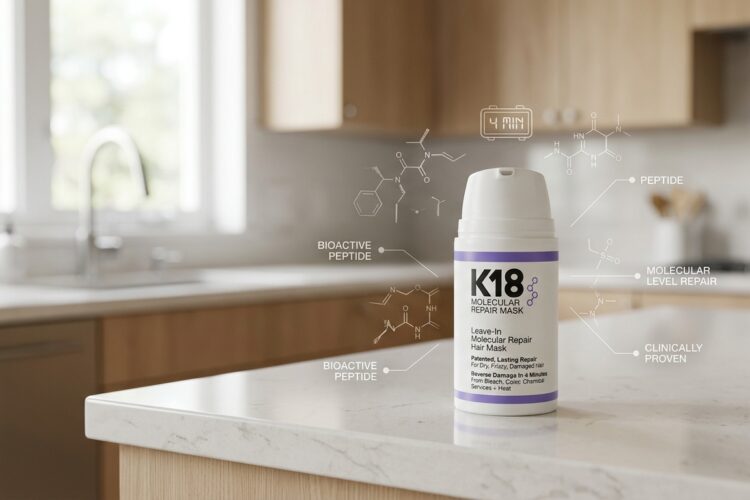
The K18 Leave-In Molecular Repair Hair Mask is positioned differently from traditional deep conditioners or hair masks. Rather than focusing solely on surface coating or temporary softening, it’s built around a patented peptide technology designed to work at a molecular level within the hair structure. This article explores what that means in practice, how the product can be incorporated into a hair care routine, and what’s worth understanding before investing in this type of treatment.
Key Features
Patented Molecular Repair Technology
The foundation of the K18 formula is a patented bioactive peptide called K18Peptide, developed specifically to reconnect broken keratin chains within the hair’s cortex. This is a meaningfully different approach from most conditioning treatments, which work primarily by coating the outside of the hair shaft. The K18Peptide is designed to penetrate into the hair structure and reconnect the polypeptide chains that break down as a result of chemical services, heat, and mechanical stress.
Leave-In Application Format
Unlike traditional hair masks that require rinsing out after a set period, the K18 mask is designed to be left in the hair without rinsing. This leave-in format is central to how the product works, as the peptide technology requires time to penetrate and interact with the hair’s internal structure. Rinsing would interrupt this process before it’s complete, which is why the leave-in application is a specific design choice rather than a matter of convenience.
Four-Minute Treatment Time
One of the more notable practical aspects of this product is its four-minute treatment claim. Rather than requiring the extended application time associated with traditional deep conditioning masks — which often recommend 20 to 30 minutes or longer — the K18 treatment is designed to work within a four-minute window before styling proceeds as normal.
Addresses Multiple Forms of Damage
The product is specifically positioned to address damage from bleach, color treatments, chemical services such as perms and relaxers, and heat styling. This breadth of coverage reflects the peptide technology’s focus on the underlying structural damage that these processes share in common, rather than being formulated for one specific type of damage.
Suitable for Dry, Frizzy, and Damaged Hair
Beyond chemically processed hair, the mask is also positioned for dry and frizzy hair in general, suggesting that its hydrating and structural repair benefits extend to hair that hasn’t been chemically treated but is still experiencing damage or texture concerns from other causes.
Clean Formula Positioning
K18 positions its formula within the clean beauty space, which generally means avoiding certain ingredients that some consumers prefer to exclude from their personal care products. This positioning appeals to those who prioritize ingredient transparency alongside performance claims.
How It Can Be Used
Post-Wash Treatment on Damp Hair
The standard application involves using the mask on freshly washed, towel-dried hair after shampooing. Importantly, the brand recommends skipping conditioner before using K18, as the conditioner’s coating effect can interfere with the peptide’s ability to penetrate the hair structure. The mask is applied to damp hair, worked through the strands, and left in for four minutes before proceeding with styling.
Regular Maintenance Between Chemical Services
For those who color, bleach, or chemically process their hair regularly, incorporating K18 as a consistent maintenance treatment between salon visits can help manage the cumulative damage that builds up over multiple chemical services.
Post-Bleaching Recovery
Bleaching is one of the most structurally damaging processes hair can undergo, as it involves significantly altering the hair’s internal chemistry. The K18 mask is specifically positioned as a tool for addressing bleach-related damage, making it particularly relevant in the weeks following a significant lightening service.
Preparation Before Heat Styling
Because the product is left in rather than rinsed out, it remains in the hair during the styling process, providing some degree of ongoing structural support while heat styling tools are used. Some users incorporate it specifically as a pre-styling treatment on wash days.
Frizz Management for Non-Chemically Treated Hair
Those who deal with frizz and dryness without chemical services can also use this mask as part of their wash-day routine, drawing on its hydrating and smoothing properties even without the specific context of chemical damage repair.
Incorporating Into a Simplified Routine
The four-minute treatment time and leave-in format make K18 relatively easy to work into an existing routine without significantly extending the time needed for wash day, which is an appealing practical aspect for those with busy schedules.
Who It May Be Suitable For
Those Who Regularly Color or Bleach Their Hair
People who maintain a consistent color routine, whether at home or in a salon, are among the most natural users for this product. The cumulative structural damage from repeated color or bleaching services is precisely what the K18Peptide technology is designed to address.
People with Significantly Damaged Hair
Beyond color treatment, those whose hair has been significantly compromised by heat styling, mechanical damage, or environmental factors may find that a treatment focused on structural repair offers a meaningful difference compared to standard conditioning products.
Those Frustrated with Traditional Deep Conditioners
For users who have consistently used traditional hair masks and conditioners without seeing significant improvement in strength or elasticity, a product that works differently at a molecular level may offer a new approach worth exploring.
Busy Individuals Who Want Effective Treatments
The four-minute treatment time makes this mask accessible to those who want the benefits of a hair treatment without committing to the extended application times that traditional masks require, fitting more easily into a standard wash-day routine.
Those with Frizzy or Unmanageable Hair
Even without chemical damage, those who struggle with persistent frizz or hair that feels rough and unmanageable may find that the structural support and smoothing properties of this treatment help improve their hair’s overall texture and behavior.
Salon Professionals and Enthusiasts
Given K18’s origins in the professional salon space, hairdressers and those who follow professional hair care trends closely may already be familiar with the product and interested in its at-home version.
Important Things to Consider
Skipping Conditioner Before Application
The instruction to skip conditioner before using K18 is an important one that differs from how most people approach their wash-day routine. Conditioner applied before the mask can coat the hair shaft and prevent the peptide from penetrating effectively, reducing the treatment’s impact. This step requires a deliberate change to established routine habits for most users.
Results Build Over Time
While some improvement in manageability and texture may be noticeable after the first use, the full benefits of the molecular repair process tend to build with consistent use over multiple wash days. Managing expectations around immediate versus cumulative results is important.
Not a Replacement for a Haircut
For hair that has significant split ends or physical breakage at the ends of the strands, no treatment product — regardless of how advanced its technology — can repair split ends that have already formed. Trimming damaged ends while incorporating a structural repair treatment into a routine is generally the most effective combined approach.
Price Per Use
K18 is positioned at a premium price point relative to standard hair masks and conditioners. Because only a small amount is used per application, the cost per use can be more favorable than the overall product price suggests, though this is worth calculating based on individual usage patterns and hair length.
Product Interaction Awareness
Because K18 works differently from traditional conditioning products and specifically requires skipping conditioner before use, understanding how it fits into a broader routine — including other treatment products like bond builders or protein treatments — is worth considering to avoid counterproductive product interactions.
Realistic Expectations for Severely Damaged Hair
While the technology behind K18 is based on clinical research and patented science, severely damaged hair — particularly hair that has been repeatedly bleached or subjected to extreme chemical processing — may require professional intervention alongside at-home treatments for meaningful recovery.
Comparison of General Categories
Traditional Rinse-Out Hair Masks and Deep Conditioners
These products are designed to coat and temporarily soften the hair’s surface, improving manageability and texture. They work primarily on the outside of the hair shaft and are rinsed out after application. While effective for immediate softness and detangling, they don’t address internal structural damage in the way that peptide-based treatments aim to.
Bond-Building Treatments
This category, most commonly associated with brands like Olaplex, focuses on repairing broken disulfide bonds within the hair structure. Bond builders and molecular peptide treatments like K18 share the goal of structural repair but approach it through different chemical mechanisms — bond builders target disulfide bonds specifically, while K18’s peptide is designed to reconnect keratin polypeptide chains.
Protein Treatments
Protein-based hair treatments work by temporarily filling in gaps in the hair’s cuticle and cortex with protein molecules, strengthening the hair and reducing breakage. These can be effective for damage management but require careful balance, as overuse can lead to protein overload, which makes hair stiff and brittle.
Leave-In Conditioners
Standard leave-in conditioners are designed to add moisture, reduce frizz, and improve manageability without rinsing. They work on the surface of the hair and are not formulated for structural repair, distinguishing them from treatment-focused leave-in products like K18.
Scalp and Root Treatment Products
These focus on the scalp rather than the hair shaft, addressing concerns like dryness, buildup, or scalp health. They serve a different function from structural hair repair treatments and target a different part of the hair system entirely.
Frequently Asked Questions
Why should conditioner be skipped before using K18?
Conditioner coats the outer surface of the hair shaft, which can create a barrier that prevents the K18Peptide from penetrating into the hair’s internal structure. Skipping conditioner allows the active peptide to interact directly with the hair’s cortex for maximum effectiveness.
Can K18 be used on color-treated hair that isn’t bleached?
Yes, the product is designed to address damage from color treatments broadly, not just bleaching. Hair that has been repeatedly colored without bleaching still undergoes chemical changes that the K18 treatment is designed to support.
How often should this mask be used?
Usage frequency depends on the level of damage and individual hair condition. Some users find weekly use effective for maintenance, while those with more significant damage may benefit from more frequent initial use before transitioning to a maintenance schedule.
Does K18 replace the need for a conditioner entirely?
Some users find that K18 alone provides enough softness and manageability to replace a traditional conditioner, while others prefer to use a conditioner on subsequent wash days when they’re not using the K18 treatment. Individual hair needs vary significantly.
Can this product be used on natural, unprocessed hair?
Yes, while the product is specifically positioned for damaged and chemically processed hair, those with natural hair experiencing dryness or frizz can also use it as part of their routine.
Is the four-minute treatment time strictly necessary?
The four-minute window is the time the brand has identified for the peptide technology to complete its interaction with the hair structure. While some users leave it on longer without negative effects, the brand’s recommendation is based on the treatment’s intended mechanism.
Can K18 be used alongside other hair treatments like Olaplex?
Many users incorporate both bond-building and peptide repair treatments into their routines, though using them in the same wash session requires careful attention to application order and instructions for each product. Consulting specific product guidelines is advisable when combining treatments.
Conclusion
The K18 Leave-In Molecular Repair Hair Mask represents a distinct approach to hair damage treatment, rooted in patented peptide science rather than the surface-coating mechanism of traditional conditioning products. Its leave-in format, four-minute treatment time, and focus on reconnecting broken keratin chains within the hair’s internal structure make it a meaningfully different tool from most products in the hair care market. For those dealing with the structural consequences of bleaching, coloring, heat styling, or chemical services, it offers a scientifically grounded approach to ongoing hair repair that complements rather than duplicates what standard conditioners and masks provide. As with any treatment product, consistent use and realistic expectations about the pace of improvement will play a central role in the overall experience.